
Golf programs face recognition challenges that differ fundamentally from higher-visibility sports. Achievements span team conference titles, individual tournament victories, professional tour success, coaching excellence, and lifelong amateur competition. Unlike revenue-generating arena sports that benefit from large booster networks and dedicated display space, golf recognition often receives lower priority in facility planning and budget allocation.
Effective recognition plays a vital role in golf program success. It strengthens alumni connections, supports fundraising, attracts prospective recruits, and builds pride among current student-athletes. Transitioning from static physical displays to dynamic, interactive digital recognition platforms allows athletic departments to celebrate their complete history without spatial or financial constraints.
The Current State of Golf Recognition
Benchmarking data reveals significant gaps in how golf programs track, display, and celebrate their storied histories compared to other collegiate sports:
- Lower Display Prevalence: Only 34% of golf programs maintain dedicated recognition displays for distinguished alumni, compared to 67% of football programs and 58% of basketball programs.
- Limited Digital Adoption: Nearly 72% of programs rely on traditional static plaques, trophy cases, or have no formal display system at all. Only 28% have implemented interactive digital platforms.
- Narrow Focus on Professional Tours: Program criteria lean heavily toward professional tour success (89%), often leaving coaching milestones (41%), amateur championship titles (38%), and program contributions (34%) unacknowledged.
- Budget Disparities: Average annual recognition budgets for golf programs sit well below those of major arena sports, forcing staff to defer updates or settle for minimal visual displays.
Relying exclusively on traditional physical plaques creates ongoing maintenance hurdles. Physical trophy cases quickly run out of wall space, plaques are costly to update, and static walls fail to capture the attention of modern student-athletes and visiting recruits.
The Impact of Interactive Digital Displays
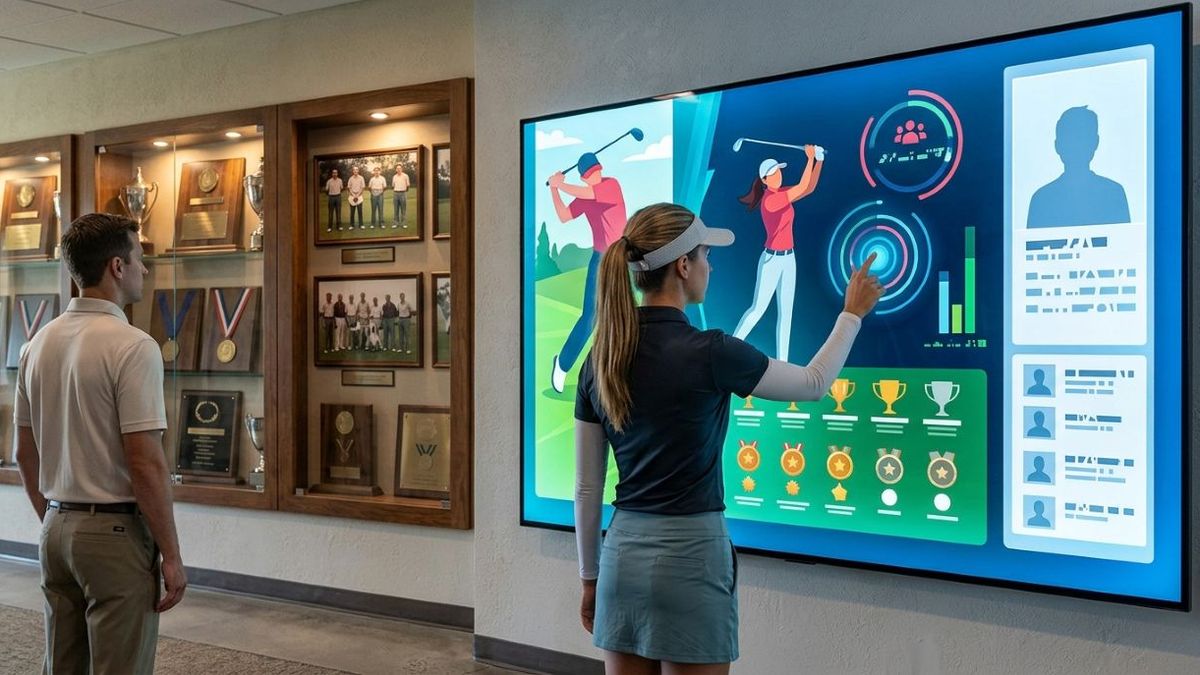
Interactive digital display platforms solve the physical limitations of traditional trophy cases by providing unlimited capacity, high-definition visuals, and cloud-managed flexibility. Placing interactive touchscreens in athletic facilities or golf clubhouses transforms quiet walls into engaging hubs of program history.
Engaging Multiple Audiences
User interaction analytics from active digital recognition platforms highlight how different stakeholder groups engage with program history:
- Golf Alumni (38% of users): Explore historical rosters, revisit team accomplishments, and reconnect with fellow teammates.
- Current Student-Athletes (24% of users): Gain a deeper appreciation for program tradition, establishing aspirational benchmarks for their own collegiate careers.
- Prospective Recruits and Families (19% of users): Experience an immersive view of player development, facility quality, and post-collegiate success during campus tours.
- Coaches, Staff, and Supporters (19% of users): Leverage historical media during alumni gatherings, donor meetings, and team events.
Search patterns indicate that 61% of users search directly by name, 28% browse by team era or championship year, and 11% filter by achievement type. Personal connection and storytelling drive user engagement.
Measurable Benefits for Alumni Relations and Development
Upgrading to modern interactive displays delivers direct returns for athletic development officers and advancement teams. Digital platforms turn passive historical archives into active tools for donor cultivation.
Driving Philanthropic Support
- Increased Donor Participation: Golf programs utilizing comprehensive digital displays see donor participation rise by an average of 16% in the first year, reaching up to 28% growth by year three.
- Higher Major Gift Values: Honored alumni who see their achievements permanently celebrated on interactive program displays contribute significantly higher average gift amounts than non-recognized peers.
- Enhanced Event Turnout: Programs with dedicated, interactive recognition experience an average 31% increase in alumni golf tournament attendance and higher participation in mentoring programs.
When alumni see their contributions honored in a prominent, high-tech format, it reinforces institutional pride and creates favorable conditions for long-term philanthropic support.
Essential Features of Effective Digital Platforms
To deliver lasting value, modern athletic recognition platforms must combine intuitive hardware with flexible content management software.
Expanded Recognition Criteria
Effective digital systems celebrate diverse forms of achievement across every era of a program:
- Competitive Milestones: All-American honors, conference championships, individual tournament titles, and professional tour victories.
- Coaching & Leadership: Career wins, coach-of-the-year awards, hall-of-fame inductions, and program mentorship.
- Academic Distinction: Scholar All-American awards, academic honors, and postgraduate achievements.
- Service & Community Impact: Contributions to the program, facility development, industry leadership, and lifetime support.
Rich Multimedia Integration
Digital touchscreens allow programs to tell complete stories through multi-layered media profiles:
- High-Resolution Galleries: Side-by-side comparisons of historical photos and modern professional imagery.
- Video Highlights: Tournament footage, swing analysis clips, induction speeches, and interview segments.
- Interactive Statistics: Searchable career scoring averages, tournament results, and year-by-year team records.
- Dynamic Content Updates: Remote cloud software allows staff to publish real-time updates following major tournament wins or tour accomplishments.
Profiles featuring rich multimedia maintain average view durations 3.4 times longer than basic text profiles, maximizing engagement during visits and recruiting tours.
Best Practices for Phased Implementation
Implementing an interactive digital display system succeeds best when approached in structured, manageable phases rather than a single rapid rollout.
Phase 1: Foundation (Months 1–3)
- Establish clear, objective recognition criteria covering diverse achievement types.
- Audit existing physical archives, media guides, and photo records to identify the inaugural induction class.
- Select an intuitive interactive touchscreen solution and cloud-based software tailored for athletic recognition.
- Secure buy-in from athletic directors, coaches, and advancement leaders.
Phase 2: Content & Launch (Months 3–6)
- Gather high-resolution photographs, biographical summaries, and video clips for initial honorees.
- Install commercial-grade interactive displays in high-traffic areas such as facility lobbies, team meeting rooms, or clubhouse entrances.
- Host a dedicated induction ceremony or alumni gathering to unveil the digital recognition display.
Phase 3: Sustainability & Growth (Ongoing)
- Establish an annual induction cycle to maintain excitement and regular engagement.
- Push real-time achievement updates during peak competitive periods, such as conference championships or major professional events.
- Integrate digital profile links into recruiting packages, alumni newsletters, and fundraising communications.
- Monitor engagement metrics through built-in platform analytics to continuously refine content.
Structuring Program Investment
Resource requirements scale efficiently based on program size, facility layout, and strategic goals:
- Essential Displays: Feature a central interactive touchscreen display, core biographical profiles, historical team rosters, and annual induction management.
- Expanded Displays: Integrate comprehensive video archives, expanded photo galleries, interactive scorecards, and multi-touch display hardware.
- Comprehensive Multi-Display Solutions: Combine large-format interactive wall displays, synchronized wall enclosures, integrated mobile access, and donor wall features.
Phasing hardware and content development over time allows programs to distribute costs naturally across budget cycles while continually adding value for alumni and supporters.
Building a Lasting Legacy
A golf program's history represents one of its most valuable strategic assets. Relying on static plaques or overcrowded trophy cases limits visibility and fails to reflect the true scope of alumni success.
By adopting interactive digital recognition displays, athletic departments eliminate space restrictions, modernizing how they honor their past. A dynamic digital hall of fame preserves program heritage, elevates recruiting efforts, inspires current student-athletes, and strengthens alumni involvement for generations to come.