Athletic programs, country clubs, educational institutions, and community organizations build their culture upon a foundation of history, dedication, and competitive success, often showcased in trophy cases for schools. Over decades of competition, these institutions accumulate an extraordinary array of honors: championship golf balls, tournament trophies, banners, plaques, and individual achievement milestones. Recognizing these accomplishments is not merely a matter of nostalgia; it is a vital strategy for inspiring current participants, fostering community pride, encouraging donor engagement, and building a lasting legacy.
Historically, recognition relied entirely on physical structures such as glass trophy cases, wall-mounted shadow boxes, and wooden award boards lined with engraved brass plates. While these traditional displays provided a tangible touchpoint, growing programs inevitably encounter physical limits. Lobbies become crowded, wall space disappears, and historical records are often forced into storage boxes or dark basements to make room for newer achievements.
The modern landscape of institutional recognition has evolved significantly. Today, athletic directors, facility managers, and club executives are turning to interactive digital recognition display systems and hybrid wall solutions that combine physical elegance with unlimited digital capacity. This comprehensive guide explores the principles of effective achievement display, comparing physical showcase options with modern digital recognition technology to help your organization make informed decisions.
The Evolution of Recognition in Athletic and Institutional Spaces
Recognizing athletic and community achievements has long been a cornerstone of institutional tradition, often showcased in a glass display cabinet. Early recognition efforts focused on simple physical markers: a wooden plaque mounted in a hallway, a framed team photograph, or a dedicated cabinet displaying championship hardware, which can now be upgraded to modern glass display cases. These physical markers served as central gathering points where student-athletes, members, alumni, and visitors could reflect on shared history and celebrate significant milestones.
As programs matured and competitive schedules expanded, the sheer volume of achievements began to overwhelm physical environments. An athletic department that manages dozens of varsity sports, or a country club that hosts multiple annual tournaments, generates hundreds of award-worthy moments every decade. Traditional glass trophy cases, while classic in appearance, possess fixed physical footprints that cannot adapt to continuous growth.
Before uploading content to your digital system, establish clear, consistent guidelines defining what accomplishments will be showcased in the glass display case for collectibles.
- Archiving Older Achievements: Removing historical trophies and foundational honors from public view to accommodate recent victories, effectively erasing early institutional history.
- Overcrowding Cabinets: Cramming awards, plaques, and memorabilia tightly onto physical shelves, creating visual clutter that reduces the prominence of individual accomplishments.
- Adding Scattered Displays can be enhanced by using adjustable shelves in glass display cases to highlight various achievements across multiple locations. Installing mismatched cabinets across disparate hallways, fragmenting the organization's historical narrative and cluttering building aesthetics.
To overcome these challenges, institutions are rethinking recognition. Modern display strategies focus on creating engaging, centralized recognition hubs that honor foundational history while seamlessly accommodating future growth.
Preservation and Visibility Challenges of Physical Memorabilia
Displaying physical sports artifacts presents unique technical and environmental challenges that go far beyond simple aesthetics. Items such as commemorative golf balls from championship rounds, hole-in-one achievements, historic scorecards, or signed apparel require specialized environmental protection in a display case with glass.
Environmental Degradation Factors
Tournament golf balls, signed memorabilia, paper scorecards, and fabric banners are highly susceptible to environmental deterioration over time, especially when not stored in proper display cases for collectibles.
- Ultraviolet Light Exposure: Natural sunlight from windows and standard indoor fluorescent fixtures emit ultraviolet radiation. UV rays break down synthetic materials, causing golf ball covers to yellow, paper records to brown, and autographed ink to fade permanently.
- Temperature and Humidity Fluctuations: Uncontrolled climate conditions in hallways, lobby entryways, or clubhouse vestibules accelerate material decay. High humidity encourages mold growth on leather and paper, while extreme temperature swings weaken adhesives and tarnish metal plaques.
- Dust and Airborne Contaminants: Open or poorly sealed display cases allow dust, oils, and airborne particulate matter to settle on displayed items. Frequent manual cleaning of display cases for schools risks scratching delicate surfaces or smudging historic signatures.
- Physical Wear and Vibration: Memorabilia stored in unstable or high-traffic areas can shift, roll, or strike adjacent items, resulting in scuff marks, structural chips, or surface abrasion.
Viewing Distance and Visual Prominence
Physical dimensions also impact how effectively an item communicates its significance within a wood display. A standard golf ball measures just 1.68 inches in diameter. When placed inside a deep glass trophy case alongside tall metal cups and wide wooden plaques, small items lose visual prominence.
Furthermore, small engraved metal plates attached to physical displays offer extremely limited surface area for information about the items in the case display. A brief plaque can state a name, a date, and a score, but it fails to tell the deeper story: the competitive context of the tournament, the weather conditions on the course, the winning play strategy, or the personal dedication of the athlete. Without detailed narrative context, physical artifacts in a glass case remain static objects rather than engaging stories.
Traditional Physical Display Options and Their Limitations
When designing physical recognition spaces, organizations traditionally select from three primary structural options, each presenting distinct functional trade-offs.
Wall-Mounted Shadow Boxes
Shadow boxes are framed, shallow wall cabinets designed to hold small items such as golf balls, medals, or commemorative patches, often displayed on a premium display or medal hanger display.
- Characteristics: Wall-mounted shadow boxes offer a low-profile footprint suitable for narrow hallways or compact lobby spaces where floor area is unavailable, making them ideal for trophy cases for schools. Typically measuring between 24x36 and 36x48 inches, shadow boxes feature glass front panels and individual mounting cups or shelves to secure items in fixed positions.
- Strengths: The strengths of various programs can be effectively highlighted using wall-mounted displays that feature key achievements. When physical display cases reach capacity, organizations face difficult compromises regarding what to showcase in their corner display cases.
- Limitations may arise when trying to integrate traditional displays with modern glass display cases that require specific electrical and network setups, potentially complicating the installation of tower displays. Shadow boxes possess small, fixed capacities—often holding only 12 to 24 items. Once full, an organization must purchase and mount additional boxes or stop displaying new achievements.
Freestanding Display Cabinets
Freestanding cabinets are large, independent furniture pieces designed to showcase larger trophy collections, championship cups, and prominent historical artifacts, often enhanced with tempered glass for protection.
- Characteristics: Built with hardwood or metal framing, full-length glass doors, internal glass shelving, and integrated LED lighting systems, these display cases are designed for optimal presentation.
- Strengths: Provide high visual impact and museum-quality presentation suitable for central clubhouse foyers or athletic center lobbies, utilizing a glass display cabinet with LED lighting.
- Limitations: One limitation of traditional display cases is that they often lack adjustable glass features for optimal viewing angles. Require significant dedicated floor space, obstruct foot traffic corridors, and represent substantial financial investments, especially when using large glass display cabinets. Managing physical access, replacing burnt-out light bulbs, and keeping interior glass dust-free requires ongoing labor.
Custom Built-In Wall Displays
Built-in displays are permanent architectural installations constructed directly into the walls of a facility.
- Characteristics: Custom-milled millwork designed to match building interiors, featuring recessed lighting, custom shelving, and heavy-duty glass sliding doors.
- Strengths: Seamlessly integrate with building architecture and create impressive, permanent showcase walls.
- Limitations: Extremely high initial capital construction costs. Because built-in cases are architecturally fixed, expanding them in the future requires costly building renovations.
The Power of Interactive Digital Recognition Systems
Digital recognition display platforms represent a modern evolution in how institutions celebrate achievement, often utilizing integrated LED technology for better visibility. By replacing or supplementing static physical cases with high-definition interactive touchscreens and cloud-managed software, organizations unlock capabilities that physical displays cannot provide.
Unlimited Recognition Capacity
The primary advantage of a digital recognition system is unlimited storage capacity. Physical display cases are strictly bound by square footage and shelf depth; digital displays are not, allowing for greater flexibility in storage and display.
A single wall-mounted touchscreen kiosk can store and present thousands of individual accomplishments across every sport, academic program, donor tier, and historical era. Whether your organization needs to showcase 20 championship golf balls or 5,000 historical hall-of-fame inductees, the digital display handles the entire collection within a compact physical footprint.
Rich Multimedia Storytelling
Static trophies and engraved plaques present basic text. Interactive digital recognition platforms transform passive viewing into an immersive multimedia experience. Through dynamic touchscreen interfaces, visitors can explore:
- High-Resolution Photography: This high-resolution photography can be featured prominently in wall-mounted display cases to enhance visual appeal. Expandable image galleries showing championship ceremony photos, team portraits, historic course photos, and action shots.
- Video Highlight Reels: Crisp video footage documenting championship-winning moments, game highlights, interview clips, and historical retrospective films.
- Interactive Scorecards and Documents displayed alongside the trophies in the display case with adjustable LED lighting. Digitized historical scorecards, newspaper clippings, game programs, and original letters presented in zoomable formats.
- Audio Commentary: The audio commentary can be integrated into wall-mounted trophy displays to provide context and enhance visitor engagement. Recorded interviews with coaches, players, or committee leaders sharing first-hand accounts of memorable victories can be displayed alongside trophies in a corner display.
- Comprehensive Player Profiles for each athlete can be featured prominently in adjustable trophy display cases. In-depth statistical records, biographical details, career achievements, and academic honors connected to individual athletes.
Searchability and Personal Connection
Navigating a massive physical trophy case to find a specific achievement from decades past can be tedious and frustrating. Digital display systems feature intuitive search and filter engines, enhancing the functionality of wall-mounted trophy displays.
Visitors, alumni, prospective families, and student-athletes can instantly filter content by:
- Individual athlete or coach name
- Graduation year or championship season
- Sport or competitive division represented in the wood trophy display case.
- Specific award category (e.g., Hole-in-One, All-State Honors, Conference Championships)
An alumnus returning to campus after twenty years can approach the interactive display, enter their name into the search interface, and immediately view their personal career statistics, team photos, and award history. This interactive capability creates a memorable personal connection between visitors and the institution, especially when displayed in a wall-mounted display case.
Cloud-Based Content Management
Updating traditional trophy cases involves a slow, multi-step process: designing text, ordering engraved brass plates, waiting weeks for delivery, unlocking physical cabinets, and manually mounting hardware.
Digital recognition software utilizes web-based content management systems (CMS) to update information in display cases for collectibles in schools. Authorized staff members can upload new photos, publish tournament results, add profile details, and reorganize content from any web browser in real time. Updates appear instantly on the public display screen, eliminating vendor lead times, physical fabrication costs, and maintenance hassles.
Hybrid Recognition Models: Bridging Physical Artifacts with Digital Innovation
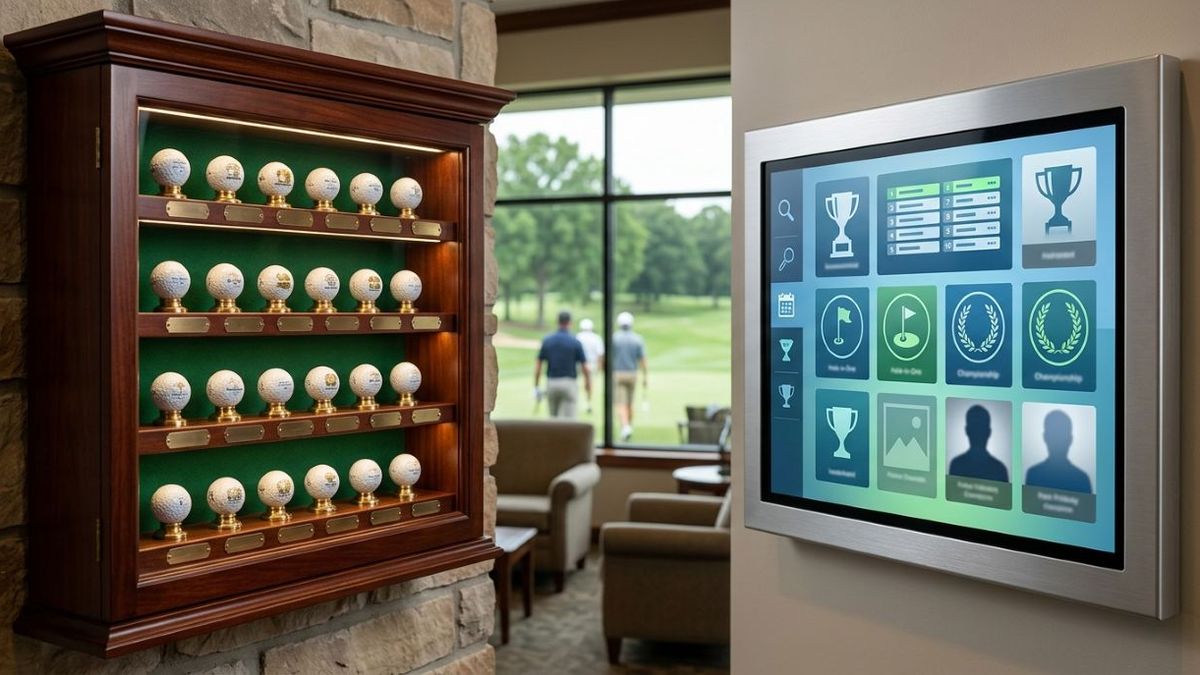
While digital recognition systems offer superior capacity and interactive depth, many institutions still value the physical presence of iconic historic artifacts. A hybrid recognition display combines physical showcase cabinets with integrated interactive touchscreens to deliver the benefits of both approaches, enhancing the user experience in trophy cases for schools.
In a hybrid configuration:
- Physical Cabinets Display Curated Icons: These curated icons are best showcased in a display case with adjustable glass that allows for easy viewing. High-value physical artifacts—such as a historic championship trophy, a foundational piece of equipment, or a small collection of historic golf balls—are showcased inside custom glass cabinets to maintain physical tradition.
- Integrated Touchscreens Provide Archive Depth: Mounted directly adjacent to or inside the cabinet structure, interactive touchscreens host the comprehensive digital archive containing every team roster, statistical record, photo gallery, and historical detail.
Advantages of the Hybrid Approach
A hybrid strategy resolves the physical capacity dilemma while respecting institutional heritage. Organizations no longer feel pressured to crowd every physical trophy onto a shelf. Instead, physical displays can feature a rotating selection of key items throughout the year, while the touchscreen display ensures that 100% of the program's history remains continuously accessible to the public.
Hybrid installations transform standard lobbies into modern, interactive halls of fame that capture immediate visual attention while inviting deep exploration through innovative tecno displays.
Comprehensive Selection Criteria and Total Cost of Ownership
Choosing the ideal recognition display solution requires evaluating current program needs, facility constraints, and long-term financial factors, including the potential for glass display cases.
Achievement Volume and Growth Projections
The rate at which your program generates new achievements should heavily influence your display strategy:
- Low Volume / Stable History can be effectively managed with a glass display cabinet that allows for easy updates and expansions. Programs with modest recognition needs that accumulate only one or two significant honors per decade may find wall-mounted shadow boxes or small cabinets sufficient.
- High Volume / Expanding History can be effectively managed with adjustable trophy display cases that allow for easy updates and expansions, especially those featuring LED lighting for better presentation. Athletic departments, multi-sport facilities, and active country clubs that celebrate multiple team titles, individual records, and member milestones each year require digital or hybrid solutions to avoid rapid physical space exhaustion.
Facility Footprint and Spatial Constraints
Before purchasing display hardware, conduct a physical facility audit to determine the best locations for trophy display cases and adjustable shelves.
- Hallway and Foyer Clearance should accommodate the installation of freestanding cabinets and glass display cases for optimal visibility. Ensure freestanding or wall-mounted cabinets comply with building codes, fire safety exit widths, and accessibility guidelines.
- Lighting and Electrical Access: Interactive touchscreen displays and lighted display cabinets require stable electrical outlets and network connectivity (Wi-Fi or hardwired Ethernet) to effectively showcase trophies and prizes in glass display cases.
- Traffic Flow in relation to the placement of wall-mounted cases. Place interactive screens in high-traffic, well-lit gathering areas—such as main lobby entryways or facility concourses—where visitors can comfortably gather without blocking pedestrian flow around the display shelf for collectibles.
Total Cost of Ownership Analysis
Evaluating recognition solutions based solely on initial hardware purchase price creates an incomplete picture. A true comparison examines the Total Cost of Ownership (TCO) over a five to ten-year lifespan.
Physical Trophy Case TCO Factors:
- Initial cabinet purchase price, shipping, and professional delivery
- Installation, wall mounting, or custom architectural carpentry
- Recurring fabrication costs for engraved brass plates and acrylic signs can be reduced by using digital recognition software displayed in a mounted display.20–75 per item for each display shelf for collectibles.
- Manual labor for cleaning, glass polishing, and bulb replacement
- Future capital expenses required to build or buy additional wall-mounted cases when space runs out.
Digital Recognition System TCO Factors:
- Initial commercial-grade touchscreen hardware and mounting hardware for the display case with adjustable LED lighting.
- Digital software license and setup configuration
- Content digitizing and initial data entry
- Near-zero recurring cost per new achievement added (unlimited digital updates without material fabrication) makes it ideal for maintaining a floor display of trophies and awards in a display cabinet with glass.
- Ongoing remote software updates and feature enhancements included in annual subscriptions
For active programs adding dozens of honors annually, digital display systems achieve significant cost efficiency over time by eliminating ongoing engraving, mounting, and physical expansion expenses, especially when integrated with glass display cases.
Best Practices for Implementing an Interactive Recognition Display
Transitioning to a modern interactive recognition platform requires structured planning to ensure long-term engagement and ease of management.
Establish Clear Recognition Criteria
To maximize community reach, choose a digital recognition platform that offers web-accessible mirror sites and integrates with a floor display case with LED light for enhanced visibility. Standardize categories across all sports and activities:
- Team Achievements: Conference championships, regional titles, state/national tournament qualifications, and undefeated seasons are often commemorated in display shelves that highlight these achievements.
- Individual Milestones: Hole-in-one achievements, course record scores, all-conference/all-state honors, and career scoring thresholds.
- Institutional Honors: These honors are often prominently featured in glass trophy displays to celebrate achievements. Hall of fame inductees, coaching milestone wins, academic excellence awards, and distinguished service honors can be prominently featured in a display case with LED light.
- Donor & Community Recognition: Major financial contributors, capital campaign supporters, and community volunteers contribute to the success of our trophy display case.
Plan the Digitization Process
Preserving physical historical records requires methodical digitization:
- High-Resolution Scanning can be utilized to create digital versions of prizes displayed in glass display cases with tempered glass doors. Scan historic team photographs, paper scorecards, newspaper clippings, and tournament programs at high resolution (300+ DPI) to create a mounted display that highlights the team's legacy.
- Metadata Tagging: Organize digital files by date, sport, season, opponent, and participant names to make content easy to search within the CMS for the wood trophy display case.
- Quality Photography: Take clean, glare-free digital photographs of existing physical trophies, championship golf balls, and banners to include in digital image galleries.
Utilize User-Friendly Content Management Workflows
Select a recognition software platform designed for non-technical administrators to manage content displayed in cases for schools. The content management system should feature intuitive drag-and-drop interfaces, form-based profile entries, and bulk upload capabilities. Assign content updates to specific department staff, coaches, or committee members to distribute the administrative workload effectively in managing the trophy shelf.
Extend Recognition Beyond Facility Walls
To maximize community reach, choose a digital recognition platform that offers web-accessible mirror sites and integrates with a display case with LED light for enhanced visibility. A web-based extension converts your physical touchscreen display into an online digital hall of fame accessible from mobile phones, tablets, and personal computers worldwide.
Remote web accessibility allows alumni living in other states, prospective recruits evaluating your program from home, and distant family members to explore your institutional history anytime, anywhere.
Conclusion: Honoring the Past While Embracing the Future
Every championship golf ball, tournament trophy, and hall-of-fame plaque represents hours of dedication, teamwork, and athletic excellence. How your organization chooses to display these achievements communicates your values to current participants, visitors, and future generations.
While traditional physical trophy cases and shadow boxes maintain a nostalgic charm, their physical limitations, preservation challenges, and static presentations struggle to keep pace with dynamic, growing programs. Modern interactive digital recognition displays and hybrid wall solutions eliminate spatial constraints, safeguard historical records, provide rich multimedia storytelling, and deliver long-term cost efficiency.
By adopting a forward-thinking recognition strategy, your organization can create an engaging, inclusive hall of fame that honors foundational traditions while inspiring performance and community pride for decades to come.